
Blog · 16 July 2026
I don’t buy meat. I seek it out.
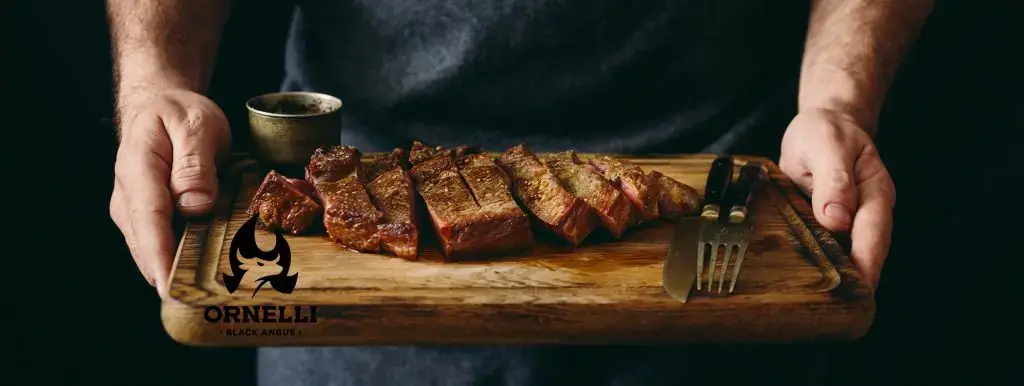
There’s a word I always use when I talk about my suppliers, and it isn’t “buy”. It’s “seek out”. Anyone can buy: you open a catalogue, you order, it arrives. Seeking out is something else. It means getting on a plane, crossing the ocean, and going to see with your own eyes where the meat I then put on your plate is born.
I’ve done it. I’ve been to Sitz Angus, in Montana: the same family has bred a single breed — Black Angus — since 1923. Four generations. I’ve been to Express Ranches, in Oklahoma, America’s largest producer of registered Angus, award-winning year after year. And to Linz Heritage Angus, also in Oklahoma, which started out as a family butcher’s shop in 1963 and today is able to supply restaurants as far away as Hong Kong.
Do you know what these places have in common? Just one thing. They chose one breed and devoted their lives to it. Not a bit of everything: one thing, pursued until it becomes the best it can be. Fashions change; they don’t.
Then there’s the other road
There are those who cross breeds at random because they grow fast, slaughter the animals before their time, and put a piece of meat on your plate thinking only about getting to the end of the day. That sort doesn’t care about the size of the steak, the colour, the aroma after cooking. What matters is closing out the day. It’s exactly the same attitude that you, in your own line of work, can spot a mile off — and can’t stand.
The word no one explains properly: marbling
The difference between the two roads has a technical name: marbling. It’s the streaks of fat inside the muscle. The world grades real Black Angus precisely by how much of it the animal can build up, because that’s where the flavour is. But put like that it’s a laboratory word, and it doesn’t convey much. So I’ll explain it the way I explain it to customers at the table: think of home-made ragù. When it’s done cooking it fills the house with its aroma. The same ragù, cold from the fridge, tastes of nothing any more — the cold locks up the fat. With a great steak it’s exactly the same. The fat in the marbling, at the right temperature, melts and fills your mouth. At the wrong temperature it just sits there, silent. That’s why the very same meat, in two different places, is not the same dinner.
And there’s one number that says it all: out of ten Angus cattle, only four reach the highest marbling standards. The rest is “Black Angus” written on a label. The breed on its own means nothing: selection is what counts. The American association that certifies it holds the largest cattle genetic archive in the world, over a million DNA tests. A century of work so that the fat, in the right place, is really there.
Why I’m telling you this
Not to lecture you. I’m telling you because I believe that you, reading this, are cut from the same cloth as those families in Montana. You do a job, and you see it through to the end — not for clocking off at 8 pm, but because some things you either do properly or you don’t do at all. It’s the only reason this place exists. In 2019, in Las Vegas, I tasted what a steak done properly means. In 2021 I turned my parents’ restaurant into the first steakhouse in Italy dedicated to that alone.
When you come for dinner, we take care of choosing the cut, the cooking and the pace of the evening. But I wanted you to know what lies behind it, beforehand. Because you recognise something done well. And now you know where it comes from.
Written for you by Nicola Ornelli
The 1st steakhouse in Italy specialising in Black Angus.
Book a table