
Blog · 16 February 2021
A new Star: Galician Black Angus DRY AGED
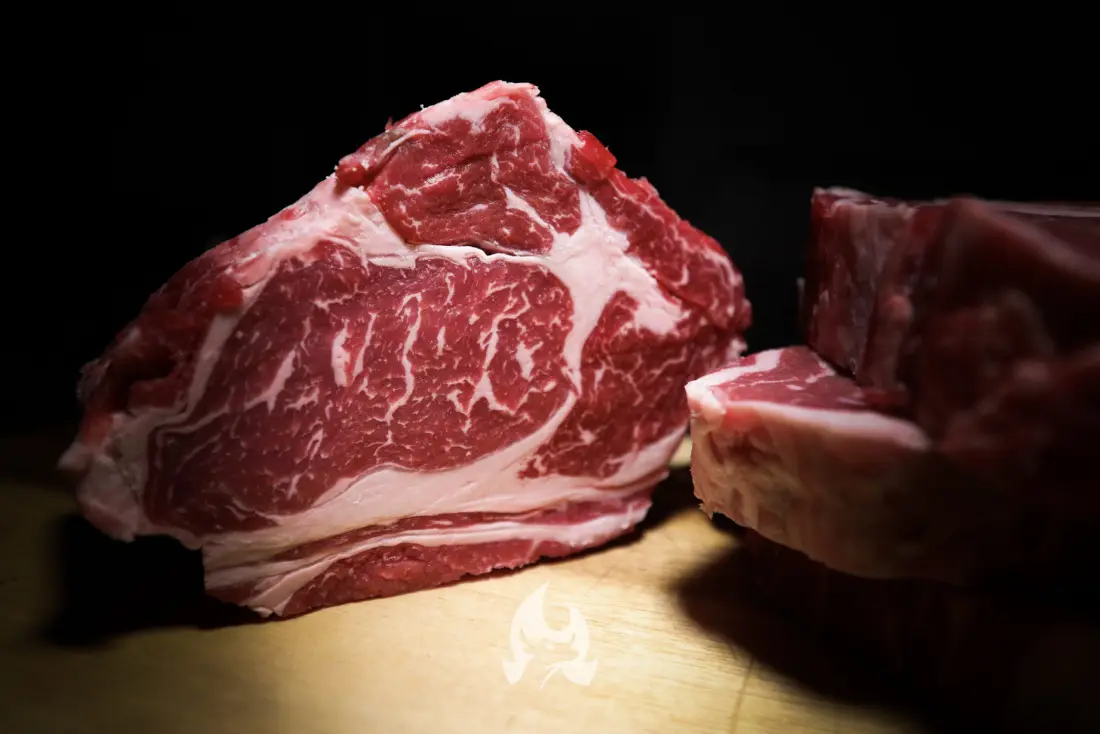
16 February 2021
After months of waiting, its moment has finally come. Until now it has been kept safe in our DRY AGING maturing room, waiting for the moment it would be ready for our wide audience, and that moment has come.
My DRY AGED is finally back
This time from Galician Black Angus
Let me remind you: DRY AGED means dry ageing, a process which, in theory, through the action of proteolytic enzymes and evaporation, makes meat more tender and more concentrated in flavour.
But is it always so?
Absolutely Not.
Between the Theoretical definition of DRY AGED ageing and actually finding a good DRY AGED steak, there lies an Ocean.
The Ocean is the countless number of people who improvise in this trade.
So are we perfect, expert agers?
I don't know Perfection in this field and I don't know whether anyone in the world can call themselves perfect in any Art or Trade.
What I can tell you, though, is that instead of spending Time on my Phone scrolling through Social Networks, I invest my time in study on international scientific platforms.
I read scientific tests and international references from laboratories that study ageing, and the effects of this technique on different types of cuts, breeds and origins.
Yes, because in my view things should be studied; the days of doing things a certain way because “ammiocuggino” told me so are over.
For those who don't know him, “ammiocuggino” is the know-it-all friend who points you the way with unshakeable certainty on the basis of a rumour, a feeling and a tremor in the force.
As someone who doesn't listen to any “ammiocuggino”, I believe that the only way to cross the Ocean we were talking about earlier, the Ocean of ignorance, is the way of study and of applying a method.
That is exactly what I do: I study, I test, I create a replicable method and put it into practice together with my Staff; the results are there for everyone to see.
But how many days has it been aged?
I haven't told you yet how many days I aged this Galician Black Angus loin for, and that's no accident.
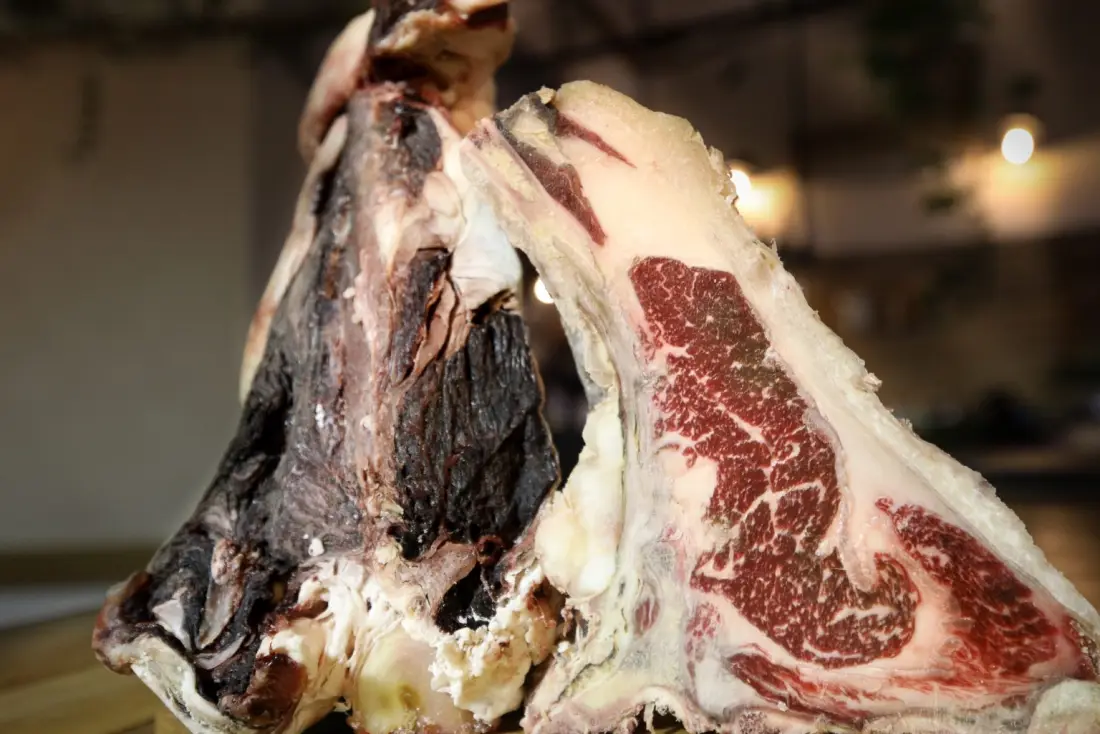
Outside and Inside of a Beef Loin aged for more than 4 months – 2019 photo, not of the Meat discussed in the article. The dark outer part with its woody texture has been completely dried out by the controlled circulation of Air in the Maturing room. It is removed delicately using special knives; underneath is the aged, extremely tender meat you can see on the right-hand side of the photo.
For now I don't want to tell you.
It isn't a secret, but I don't want it to be Your only parameter for assessing and judging a DRY AGED Steak.
I probably won't even write it on our Menu any more.
In my experience, I can tell you that a Steak DRY AGED for 50 days can be infinitely superior to a Steak aged for 100 days in the same way.
Again in my experience I can tell you that a Steak not DRY AGED for even a single day can be infinitely superior to a Steak DRY AGED for many weeks.
In practice, everything and its opposite are true.
- It depends first of all on the Raw material, if it's poor it will stay poor; the Ageing Room won't turn mud into gold.
- It depends on the ageing room, it's a machine: just as with Cars, they all have wheels, but some are safe and some less so, some are suited to long journeys and some absolutely Not.
- It depends on the human factor, whoever manages the Ageing should test and probe the Meat regularly to understand when it's time to stop the process.
- It depends on the cooking techniques: our advanced cooking in six steps is practically infallible, takes 30 minutes and guarantees you a superior result.
Do you know the difference between boiling a soggy steak, grilling a crispy Ribeye and burning a beef rib steak?
Just 30 degrees Celsius and thirty-odd seconds. Had anyone ever told you that? No.
If You want to try my Galician Black Angus DRY AGED, it's time to book Your table.
Once this is finished, we won't be talking about it again until April 2021.